Tuesday, October 24, 2023

Notes on Mira Shimabukuro, Relocating Authority

Shimabukuro, Mira. Relocating Authority: Japanese Americans Writing to Redress Mass Incarceration. University Press of Colorado, 2015. 

I read this book to see whether it would be good for the comparative rhetoric/"rhetorics in contact" course I'm developing. At first, I was thinking of just finding a chapter that I could use from it, but after reading the book, I think I'd be more interested in assigning the whole book. It's good for students to see how the author develops an overall argument or perspective as she works out the implications of her study, and I appreciate especially how reflective Shimabukuro is about her research and how the topic of her book connects to various aspects of her life. 

A few other thoughts about the book that I think recommend it for my course (or for others to read it!):

  • There's the exemplary way that she uses Japanese rhetorics/concepts together with rhetorics of Americanness in analyzing the rhetorical/literacy practices of the Japanese American internees. For instance, in chapter 6, she describes the writing/rewriting of a petition made by Japanese mothers to suspend the conscription of their Japanese American sons. (At the time, as Shimabukuro explains, the Issei, or first-generation, mothers were not allowed to become US citizens, but their sons, who were Nissei, or second-generation, were American citizens.) Shimabukuro shows how the mothers' petition combines the rhetoric of the "dutiful wife, intelligent mother" (ryosai-kenbo) that had become an important gender discourse during the Meiji era with rhetorics of American citizenship (and even what she calls "proto-model minority" rhetoric) to argue that the Japanese mothers had raised good American sons who deserved better than to be incarcerated in the "internment camps," only to be called up to fight for a country that didn't give them or their families the rights due American citizens. I like how Shimabukuro shows the nuance of the rhetorics in contact here, even showing how the idea of ryosai-kenbo is not some sort of timeless Japanese concept, but that it was a more recent phenomenon itself--and that it connected to the problematic "nation-unifying and empire-building efforts taking place in Japan" (180). 

  • I also like the way that Shimabukuro shows that the effects of these literacy activities stretch across time and intertwine with other literacy activities and rhetorical practices. As she points out, much of the writing that she discusses wasn't "successful" in the immediate sense of changing the mind of the US government. In the case of the mothers' petition, their Japanese American sons were still drafted, and the mothers only received a perfunctory response from Eleanor Roosevelt. (Oh, how you have gone down in my estimation, Mrs. Roosevelt!) In the case of the Heart Mountain Fair Play Committee's "Manifesto," in which they stated that they would refuse induction, the writers ended up in prison. But Shimabukuro demonstrates how these and other writings, including "private" writings such as poems written by internees, resurfaced or were brought back to the surface years later and served as models or inspiration for latter-day Asian American civil rights activists. She sees the recirculation of these texts as a kind of "relocated literacy" (196, emphasis in original), where there's a "reactivation of that rhetorical-activist force by Japanese American activist-descendants operating in contexts in which the Nikkei community has grown stronger" (196, emphasis in original).

  • Shimabukuro also brings up the concept of "resistant capital," citing Tara Yosso--it's meant to be considered in opposition to Bourdieu's idea of "cultural capital," and it signifies "knowledges and skills fostered through oppositional behavior that challenges inequality" (Yosso 80, qtd. in Shimabukuro 199). It appears that Yosso primarily has in mind communities of color in the US, but I wonder if it could apply in other places, too, such as (of course) Taiwan.  

  • Part of the book is a narrative of Shimabukuro's family's (particularly her father's) involvement in Japanese American activism, and by extension it traces the author's own process of developing her research project. I think this makes it more accessible for undergraduates who can thereby see how she did the research rather than just reading the results of that research. It also shows that you can be passionate about your topic and that it can grow from your own experiences, so perhaps it's an angle on doing academic work that they might not be familiar with. 
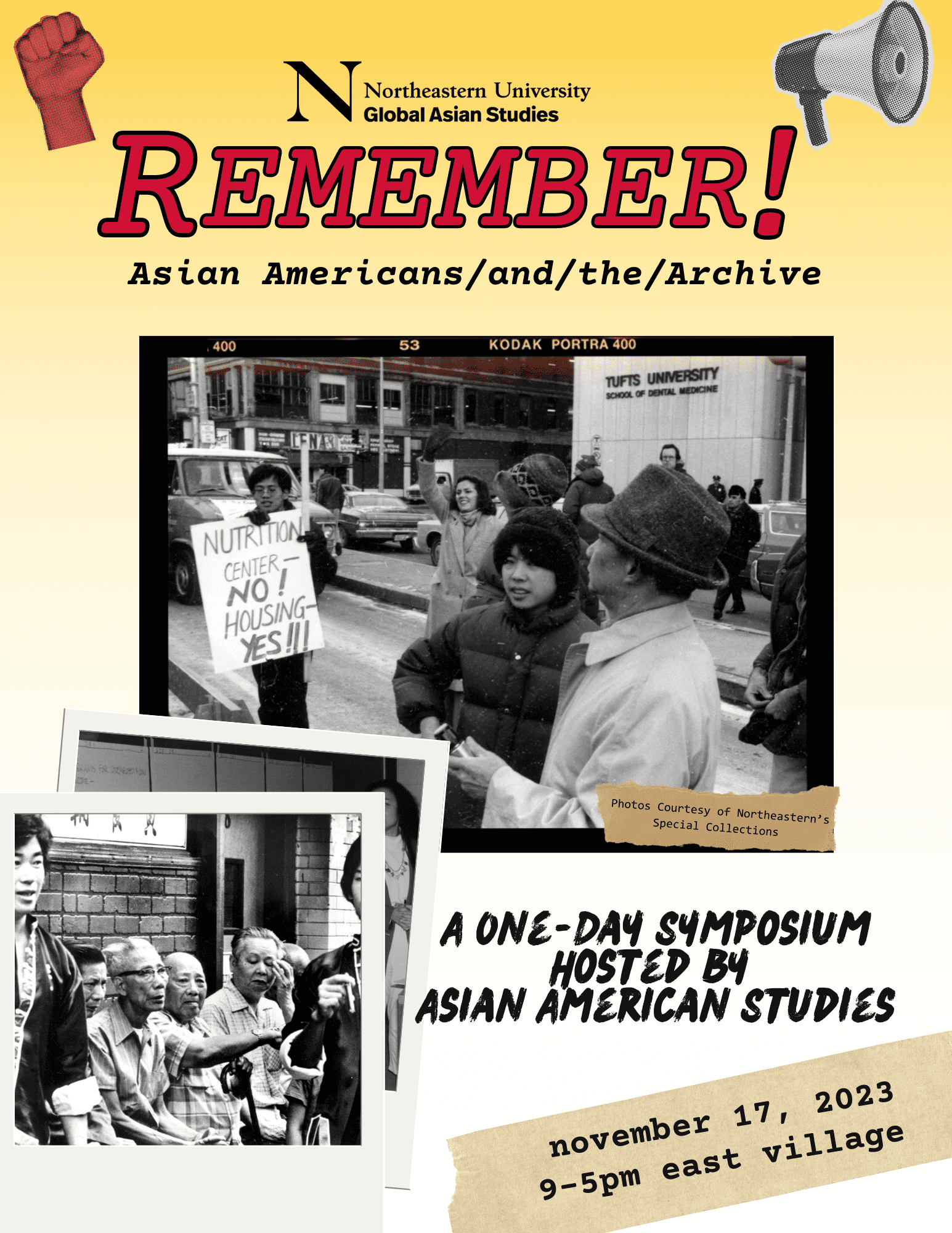
So I think I've talked myself into using this book in my course, if I get to teach it. It can also tie into a possible archival project I plan to have students do in the course. Coincidentally, Northeastern's Asian American Studies program is hosting a symposium called "Remember! Asian Americans and the Archive" on November 17, which I've signed up to attend.


[Update, 5/17/24: Here's a book talk by Shimabukuro from 2017.]

Thursday, October 19, 2023

Notes on Chu Yu-hsun (朱宥勳), When They Were Not Writing Novels 【他們沒在寫小說的時候】

朱宥勳 (Chu Yu-hsun). 【他們沒在寫小說的時候:戒嚴台灣小說家群像】When They Were Not Writing Novels: Portraits of Novelists from Taiwan Under Martial Law. 2nd. ed. 大塊文化, 2023.

Note: This isn't going to be a complete discussion of the book--to do that would probably involve writing a post as long as the book itself!

In this very readable collection of essays, Chu Yu-hsun focuses on the socio-political contexts in which nine postwar Taiwan novelists lived and worked. I especially like the anecdotes that Chu includes about the writers' experiences (such as this one about Chung Chao-cheng's "bold" decision about paper that I posted earlier). Because the book doesn't focus as much on their actual novels or their writing processes, I get the funny feeling (as I did with A-chin Hsiau's book) that many of these novelists spent more time on other activities than they did on writing novels. Hualing Nieh Engle (聶華苓), for instance, goes from editing a literary column in Free China Journal (自由中國半月刊) to moving to Iowa on the invitation of Paul Engle to join the Iowa Writer's Workshop, which Engle directed, and eventually developing an international writing program at Iowa. (Where did she find time to write her own novels?!) 

Chung Chao-cheng is depicted as spending a lot of time developing a network of Taiwanese writers and helping them get published. He pops up in other people's chapters, too, for example trying unsuccessfully to get Chen Yingzhen (陳映真) to allow his work to be published in an anthology of Taiwanese nativist writers (Chen wasn't interested because he was a pro-unification Taiwanese leftist--in fact, judging from what Chu has to say, Chen wouldn't even accept being called "Taiwanese"). 

Other writers cross paths in the book, like Lin Haiyin (林海音), who helped Chung Chao-cheng and other Taiwanese writers get opportunities to translate Western works from Japanese. According to Chu (and this is, from what I understand, a dominant narrative), writers who grew up during the Japanese era had a lot of trouble writing and getting published after 1945 because Taiwan's literary scene became dominated by exiled Mainlanders who were more experienced writing in Mandarin and who tended to exclude Taiwanese writers from getting published. Lin Haiyin, who edited the influential literary supplement of the United Daily News (聯合報), worked with Taiwanese writers to get them published, even editing their work for them at times. She had to resign from this position in 1963 due to the "Captain Incident" (船長事件), in which a poem she published got the author and her in trouble when the poem was interpreted as being critical of Chiang Kai-shek. 

The book also touches on some important martial law- and Cold War-era issues, such as the CIA's involvement in Iowa's International Writing Program, the US Information Agency's involvement in the shaping of Taiwan's literature (what Chu's teacher, Chen Jianzhong [陳建忠], has called "unattributed power" [隱蔽權力]), and the relationship between the battle of literary modernism versus nativism and the martial law regime's emphasis on "anti-Communist literature" (反共文學). 

I'm not well-read enough in Taiwanese literary history to evaluate Chu's claims about all of these points, though. I feel I should read some of the books he mentions in his afterword to get a better understanding. I also think I should read Sung-sheng Yvonne Chang's Modernism and Nativist Resistance (1993) and perhaps reread A-chin Hsiau's Politics and Cultural Nativism in 1970s Taiwan (2021) to have a better basis for assessing Chu's book. 

One problem I do have with When They Were Not Writing Novels, though, is that Chu doesn't cite sources for a lot of what he writes about. I realize this is not an academic book (probably that's what made it so readable!), but some bibliography at the end where he acknowledges his sources would help a lot in determining what his conclusions are based on. I was also a bit confused by his comment in the afterword to the effect that while most the book's judgements about the authors come from existing research on Taiwanese literature, a small portion are speculative based on Chu's own literary experience ("本書關於作家的種種判斷,大多得益自台灣文學研究的既成果;少部分則是我以自身的文學經驗推想的"). This made me wonder which portions were based on which. I think a more extensive bibliography would go a long way toward reassuring me about Chu's conclusions. In the end, though, I do want to reemphasize that I enjoyed the book, and it makes me want to dive more deeply into Taiwanese literature, if only as an amateur.

Tuesday, October 17, 2023

"Sabbatical" update

I noticed that I haven't posted anything yet this month, so I thought I should let my reader know that I'm still working on the projects I'm supposed to be doing this semester. I just sent a draft of my paper to my "mentor" (I'm calling him this; not sure he'd agree with the terminology!). The paper is still a bit of a mess--there's too much I want to say in it and a lot I haven't said. But I thought I should get someone else's view of it before I continue working on it.

I also need to work on the proposal for the comparative rhetoric course I'm planning. It has taken the form of a course in "rhetorics in contact" (as in contact zones), where we would look at situations in which two (or more) groups' discursive practices figure into the kinds of interactions those groups have. I have to read more for this to figure out how I might develop a course of this type.

I'm also working on finishing When They Were Not Writing Novels (【他們沒在寫小說的時候】), which I might have something to say about once I've read the last chapter. So stay tuned...

Tuesday, September 26, 2023

Notes on A-chin Hsiau, Politics and Cultural Nativism in 1970s Taiwan

A-chin Hsiau, Politics and Cultural Nativism in 1970s Taiwan: Youth, Narrative, Nationalism. Columbia University Press, 2021.

It's taken me a while to do some writing about this book because I'm not sure how I feel about it. I read five reviews of it that are generally quite positive, from Tanguy Lepesant, Scott SimonMing-sho Ho, Evan Dawley, and James Baron. (If you want to get an overall summary of the book, take a look at some of these reviews. I think Lepesant's and Baron's are not behind a paywall.) 

I appreciated the book because of its perspectives on the literary discussions and debates going on during the 1960s and '70s in Taiwan. I particularly appreciated the many long quotations (translated into English) from a variety of literary figures from postwar Taiwan. Hsiau ties these quotations and figures together into an argument that Taiwan's intellectuals (mostly, though not exclusively, represented in the book by writers in the literary field) moved from viewing themselves as part of the Chinese nation to viewing themselves as Taiwanese, in contradistinction to the Chinese nation. Rather than viewing this transition from an "instrumentalist" perspective, which would suggest that writers decided whether to express themselves as Chinese or Taiwanese depending on which form of identification would help their interests, or from an "essentialist" perspective, which would suggest that writers were always Taiwanese and only pretended to be "Chinese" until it was safe to express their true selves, Hsiau takes a narrative view. In this view, over the generations, writers responded to historical events like the movement to "protect the Diaoyutai islands" (保釣運動), the ROC's loss of its UN seat, etc., by rethinking their relationship with Taiwan and the ROC. As Hsiau says in the conclusion, 

Rather than a fit for an essence, or an instrument for advancing some collective's interest, I view narrative as an embodiment of human understanding that shapes human understanding and emotion in new ways with each generation. The perspective of narrative identity that I have adopted throughout this book could be described as interpretive. Historical narrative for political agents is interpretive in that it is a means of understanding the self in social and temporal context. It is a way of constructing collective identity and motivating praxis. Rather than an essence, there is a set of materials, to which new materials are continually being added, that is used to construct identity anew when the need for new kinds of action arises. There are indeed interests, but they are not calculated coldly; they are instead judged in the warmth of the chapters of the xin, the heard-and-mind that Chinese philosophers have been trying to understand since antiquity. On this understanding, it will not do for us to simply disbelieve the constant apparently heartfelt declarations of Chinese national identity in texts from the return-to-reality generation throughout the 1970s. We have to consider the possibility that if a person says he or she feels Chinese, he or she is at that moment in time. (171-2)

This quote, I think, encapsulates Hsiau's argument, and there's a part of me that agrees with him. Hsiau puts at least some of the responsibility for the "apparently heartfelt declarations of Chinese national identity" on "the power of ideological dissemination" through the educational system. As Kenneth Burke wrote in A Rhetoric of Motives, "[e]ducation ('indoctrination') exerts ... pressure upon ... [a person] from without" and that person "completes the process from within. ... Only those voices from without are effective which can speak in the language of a voice within” (39). The challenge in Taiwan, as the KMT government perceived it, was to make the voice within echo, or speak the language of, the voices from without. 

I'm reminded of a story Lung Ying-tai (龍應台) told about a performance she and her university classmates were preparing for in 1972 upon the occasion of the National Assembly’s re-election of Chiang Kai-shek to yet another term as president. As Lung wrote, 

My deepest memory was about the sentiment of comradeship felt by that bunch of 20-year-olds creating and working day and night, and we walked out in the middle of the night under the moonlit parasol trees to feel the silence of nature, the dreams of our people and the tranquility of the universe. We had no idea what "the leader" was up to, and we had no idea at that moment of youthful romance, a university student had been arrested, detained, interrogated and then sentenced to life in prison for "reading the wrong things" and "saying the wrong things."

Our gestures were exaggerated, our speech tones were artificial, our orations were stuffed with the learned wills of the adults, our emotions were sincere, our beliefs were earnest and our motives were pure, and that was because we had no idea that the most sorrowful darkness was hidden in the shadows of the parasol trees. (translation by Roland Soong)

As I wrote in my doctoral dissertation (many years ago!), Lung's reflections are a reminder that presenting government-approved thoughts with exaggerated gestures and artificial tones does not always negate the possibility of there being sincere emotions motivating the speaker. Yet at the same time, the presence in Lung’s story of the arrested university student is a reminder that not everyone had been convinced by what the schools and society had taught them. Because of this, I'm not sure that I can completely accept Hsiau's conclusions--his argument about the naiveté of  the instrumentalist and essentialist explanations for the Chinese Nationalist rhetoric and its transformation into Taiwanese nationalist rhetoric seems a bit overstated. 

When writing about Yeh Shih-t'ao's (葉石濤) earlier and later literary criticism, Chu Yu-hsun, in When They Were Not Writing Novels (【他們沒在寫小說的時候】), notes that from today's perspective, Yeh's earlier use of sentences like "Taiwan literature is part of Chinese literature" (台灣文學是中國文學的一部分), and "nativist literature is the literature of the Three People's Principles" (鄉土文學就是三民主義文學) would be annoying--and surprising, given Yeh's later Taiwan-centric perspective. Chu points out, however, that Yeh had been jailed by the KMT, which influenced his perspective on how to write. As Chu argues, looking at Yeh's rhetorical organization, after reciting a "party-state mantra," Yeh would follow up with the real point: "but in the context of Taiwan's natural environment and historical background, Taiwanese literature has developed a unique style..." (但是在台灣的自然環境和歷史背景下,台灣文學...形成了獨特的風貌......). The real point for Yeh, Chu argues, was about the locality and indigeneity of Taiwanese literature, but this was something he had to make less obvious, given the martial law context he was writing in. Hsiau would call this, probably, an example of an "essentialist" argument that Yeh was always Taiwan-centric but hid it until he could feel safe expressing it. Be that as it may, Chu's interpretation seems valid to me.

On a related point, this is where I agree with Tanguy Lepesant's critique that Hsiau should have spent more time discussing his methods. I also found Hsiau's explanation of how he was using discourse analysis a bit thin, and in my view, unconvincing. I did not find much in his book that resembled discourse analysis in any form that I would recognize. There was not a great deal of focus on language or language in use, for instance. Perhaps Hsiau is more focused on what James Paul Gee would call "Discourse" rather than "discourse" (here's a summary of that distinction). That is, Hsiau is more focused on "ways of being in the world" rather than on analysis of specific uses of language to communicate or persuade. Chu gives an example above of a more discourse-as-language-in-use form of discourse analysis that focuses on how writers use language and the contexts in which they are using language. While Hsiau's is an important book, I would like to have seen more of this kind of "discourse analysis" being used in it.


Wednesday, September 20, 2023

An anecdote about writing in postwar Taiwan from【他們沒在寫小說的時候】

Was going to do some writing on my paper this morning, but instead read a chapter from When They Were Not Writing Novels (【他們沒在寫小說的時候】). The first chapter is about Chung Chao-cheng (Zhong Zhaozheng, 鍾肇政), a Taiwanese author who helped other Taiwanese writers get their work published during the martial law period, where Mainlanders more easily got published. There’s an interesting anecdote (which comes from a memoir by Chung) of the time when Chung saw an ad in the newspaper calling for submissions for a writing contest. This was sometime in the 1950s, when Chung was probably in his mid- or late-20s, living in his family home in Longtan, Taoyuan County. Although he was interested in submitting something, he paused when he saw the requirement was to write on grid paper (有格稿紙). When he dug around his house for paper, he found some Japanese-style manuscript paper (原稿用紙, genkō yōshi), so he made what he called a “bold” (大膽) decision to use the Japanese-style paper. 

Chu Yu-hsun, the author of When They Were Not Writing Novels, explains that this was a “bold” decision because it symbolizes Chung’s use of his Japanese-era literary foundation to break into the literary world of postwar Taiwan (34-35). Chu points out that writers of Chung’s generation, who were educated in Japanese, had to learn to write in a “foreign language” (Mandarin) before they could even try to write creatively (to say nothing of trying to publish) in Chinese. The different kinds of paper are a material difference but are also symbolic of the writers’ struggle to bring their own resources to the task of writing in a new linguistic, political, and literary environment. 

The other interesting point is that the genkō yōshi Chung used was probably not that different in format from the paper used in postwar Taiwan, but it might have been different enough (maybe the name of the manufacturer was printed on the paper, for instance) that Chung was hesitant to use it. This might symbolize Taiwanese writers' concern about how Mainlander editors might view their writing, where anything that gave away the author's Taiwanese identity could be an excuse for rejection. Chu also mentions that Chung's use of "bold" might be a sign that Chung is reflecting on something that happened 35 years earlier. Chu thinks that the younger Chung probably had more of a sense of despair at the time.

Monday, September 18, 2023

【台灣演義】episode about Taichung

This is from almost a year ago--somehow I missed it. But I'll post it here mainly to remind myself to watch it when I get a chance...

Monday, September 04, 2023

Something to watch when I get a chance

This looks like an interesting episode of 台灣演義 to watch:


It's about bookstores and publishing in Taipei during the last 100 years. I wrote a blog post last year about bookstores in Taiwan during the Japanese period, so it'll be good to watch this to get more information on the fate of those bookstores. The discussion of bookstores from the Japanese period begins around 15:15. Su Shuo-bin (蘇碩斌), cited in my blog post, is one of the people interviewed.

Saturday, September 02, 2023

Darryl Sterk, trans. Scales of Injustice: The Complete Fiction of Lōa Hô

Darryl Sterk, trans. Scales of Injustice: The Complete Fiction of Lōa Hô. Honford Star, 2018.

I just finished reading this today after starting it a few months ago, which means my memory of some of the earlier stories is shaky. (One of the advantages and disadvantages of reading a collection of short stories is that you can put it down and dip into it from time to time.) So for that reason, I'm not going to write a review of the book. Besides, there are quite a few good reviews of the book already, such as those of 

  • Willow Heath (who praises both Lōa Hô's stories and Sterk's translations)
  • Tony Malone (who, on the other hand, finds the book "rather academic" and suggests that Lōa Hô "is more important for his role as an influence on Taiwanese literature than for any real genius in his writing")
  • Liz Wan (who points out that Sterk's technique of sometimes translating into colloquial English and sometimes retaining Japanese and Taiwanese [in romanized form] in the stories gives the reader the sense of what the stories read like in the original; as she puts it, "some parts are smooth, whereas reading others feels like walking with a piece of chewing gum stuck to the shoes")
  • T F Rhoden (who notes "Lōa Hô’s playful reproduction of local and artisan-specific dialect in the face of an alien bureaucracy")
  • Vivian Szu-Chin Chih (who brings up how Sterk handles the challenges of translating the short poems that Lōa Hô sometimes included in his stories, concluding that he does an effective job on giving readers the sense of the original)
I know I'll be coming back to these stories to think about his portrayal of the responses to the work of the Taiwan Cultural Association (台灣文化協會), of which Lōa Hô was a founding member, by various members of society. For instance, some of the gangsters ("eels") in “Three Unofficial Accounts from the Romance of the Slippery Eels" (1931) consider the "cultured individuals" of the TCA to be rather cowardly; as one eel puts it, "Yeah, I seen this guy at the podium, spittle flying. But the police just have to say 'cease and desist' and he dutifully climbs down from the stage. That’s how brave he is" (141). Another "eel" says, "You lot! Who knows how many people who do not accept their lot in life you’ve hurt by getting their hopes up when you can’t change nuthin'" (141). 

However, in another story, entitled "Disgrace?!" (1931), a dumpling seller agrees that while the TCA members "yak and yak, and there’s always someone who wants to go and listen" to their speeches, the TCA speakers are brave. He points out that during a speech, "three and a half sentences in, he [a Tokkō from the Special Higher Police] shouts 'Cease and desist!' And if they keep yaking [sic] they'll get dragged off the stage and beaten up. But these guys aren’t afraid of nothing" (124). But Lōa Hô gives a nuanced picture of the Taiwan Cultural Association members, ending the story with a description of a doctor who, despite being a member of the TCA, is "one of the cringers." After the police break up a play at a local temple, one of the officers barges into the doctor's clinic, and the doctor's conversation with him is held up for critique by both the townspeople and, perhaps, the author:
"Working a bit late, today, are you? Been busy lately?" (Said the doctor.)

"Ha ha! Protest if you think it's unjust. If a keibu, a superintendent, is no use to you, you'll have to go to as high as a keishikan, a senior commissioner!" (Said the officer.)

"All right. When I do, shall I commend you for meritorious service? How much more of a travel honorarium do you need?"

"Manma--as it is, no need. Let me tell you something, I've come to a realization: that I'm going to get murdered at your place by one of the rowdies outside."

"I guarantee your safety."

"We didn't just use savage means tonight, but also civil."

"I can also guarantee you'll rise through the ranks."

"Ha ha ha!"

After the officer came out someone went in to ask the doctor what had happened. But the doctor said nothing, just smiled bitterly and helplessly.

Criticism erupted out of the crowd on the street.

"For the police to be able to abuse their authority and then go and act big in front of a man who likes to talk about justice and humanity must really be satisfying, like nothing else."

"Is he proud, that the officer paid him a personal visit?"

It's a disgrace, a great disgrace. Are the people who talk about justice really so helpless when the bullies lord it over everyone? (128-9)
The last paragraph seems to be in the narrator's voice, since there are no quotation marks. Is this meant to reflect Lōa Hô's own frustration with the lack of effectiveness of the TCA? Other stories seem to reflect his feeling that the Association was not accomplishing much (especially after its split into two factions in 1927), and in the introduction to the book, Pei-yin Lin suggests that Lōa Hô's turn back to poetry after 1935 reflected his "low morale" and "sense of isolation" (xix). 

The other voices in the passages I've quoted might also reflect the feelings of the general public about the TCA. Another story, "Going to the Meeting" (undated, possibly 1926) also gives some sense of both the public's and possibly Lōa Hô's own feelings about the Association. The narrator takes a train trip to Wufeng (where Lin Hsien-t'ang, a founder of the TCA, lived) to attend a meeting of the Association. On the way, he overhears conversations between a Japanese man and his Taiwanese counterpart and between a farmer and his friend that reflect the public's ambivalent feelings about the accomplishments of the Association. To the Japanese man's questions about the TCA, the Taiwanese man suggests that many Taiwanese intellectuals "find the members of the association annoying and avoid them" (203). He also suggests that the Association is ineffective because "[t]hey are capitalist intellectuals ... [who] may not have had any profound insight, which detracts from their capacity for active resistance. They'll just hold meetings and give speeches from time to time, that's it" (204). (Sterk suggests that the speaker sounds like a socialist here.)

The second conversation, between the farmer and his friend, centers on the farmer's inability to fight against the government's takeover of the land he plowed for 3 years and the rent they are charging him for the land. When his friend suggests going to the TCA, the farmer responds sarcastically that the Lin family enriched themselves by stealing from the tenant farmers for generations. He obviously didn't expect that the TCA would do anything. Even his friend says, "Rather than striving on behalf of the Taiwanese people, they could be a little less domineering to their tenant farmers, that would be enough" (206)--to which the farmer sarcastically replies, "O-mî-tô-hút" (阿彌陀佛), suggesting this wouldn't happen without divine intervention. This conversation points out a problem Lōa Hô saw (and, he suggests, some everyday Taiwanese saw) with the ethos of the Association, or at least of some of its founding members: their own hands were not necessarily that clean. 

Anyway, the stories do provide perspectives on the TCA that might be useful to me, ones that I hadn't read elsewhere (yet). 

Thursday, August 31, 2023

Nikky Lin, ed. A Taiwanese Literature Reader

Nikky Lin, ed. A Taiwanese Literature Reader. Cambria Press, 2020.

I started a post about A-chin Hsiau's Politics and Cultural Nativism in 1970s Taiwan, but before I could get into writing it, working out my complicated feelings about Hsiau's book, I picked up Lin's collection yesterday and ended up reading the whole thing in about two sittings. 

That isn't as difficult as it might sound, for despite feeling the title might give, this book is fairly short--it contains an introduction and only six stories, comprising less than 200 pages. The six stories are all from the Japanese colonial period, five from what Ye Shitao calls the "mature period" (1926-1937) and one from what he calls the "war period" (1937-1945). (Actually, it's not clear if Long Yingzong's "The Town Planted with Papaya Trees" if from the mature period or the war period--it was published in 1937. I've counted it as being from the "mature period.") Two of the six stories--Loā Hô's "A Lever Scale" and Zhu Dianren's (zh) "Autumn Letter"--were originally written in Chinese. The other four--Yang Kui's "The Newspaper Boy," Long Yingzong's (zh) "The Town Planted with Papaya Trees," Wu Yong-fu's (zh) "Head and Body," and Wang Chang-hsiung's (zh) "Sweeping Torrent"--were written in Japanese. 

The stories were all pretty interesting, if not entirely polished (I assume this was the case in the original languages, not just in the translations), and the book made me hope for more translations of fiction from Japanese-era Taiwan.* One thing that I appreciated about the stories is where they provided sensory details about what life was like. Sometimes you get this in biographies or other non-fiction, but fiction writers seem more likely to include that detail to make you feel like you're there with the characters. (Probably the "show, don't tell" principle at work.) For instance, when Chen Yousan, the main character of "The Town Planted with Papaya Trees," arrives at the home of a colleague, he is described as "remov[ing] his sweat-soaked underclothes" and "wringing them out," something I can definitely imagine doing after walking under the hot September sun in southern Taiwan. 

Together, the stories give a variety of perspectives on what it was like to be Taiwanese under Japanese colonialism--for some, the barely suppressed rage; for others, the self-doubt, the desire to become fully Japanese balanced with the sense of second-class citizenship. 

*I've since ordered a copy of The Unbroken Chain: An Anthology of Taiwan Fiction since 1926, published in 1983.

[Note: This post is necessarily short and sketchy--my 8-year-old keeps asking me if he can spray paint something in the garage that he's working on, and I don't have that much bandwidth anymore at the end of a very tiring summer... Looking forward to my "sabbatical" that starts Sept. 6!]

Friday, August 18, 2023

Notes on Xing Lu, Rhetoric of the Chinese Cultural Revolution

Xing Lu, Rhetoric of the Chinese Cultural Revolution: The Impact on Chinese Thought, Culture, and Communication. University of South Carolina Press, 2004.

I finished reading this last Friday, but it has been a busy week. As I mentioned before, there were a couple of negative reviews of this book. One the things that one of them complained about was Lu's use of her own personal experience, especially in the first chapter, "My Family Caught in the Cultural Revolution." Howard Goldblatt calls the first chapter "a nearly fatal distraction" and defends his arguably "churlish" response to Lu's reminiscences by arguing that

(1) [i]n the quarter century and more since the Cultural Revolution ended, with the death of Mao and the convenient indictment of the Gang of Four, dozens of memoirs (with "J'accuse" in evidence far more than "mea culpa") have appeared in English, along with numerous scholarly and journalistic works on the GPCR; one more may be of some psychological benefit to the author, but it essentially duplicates what others have already written, often with more power and evocative effect than the chapter of the book under review. (2) As I stated earlier, the inclusion of a personal memoir in a work of scholarship invests the entire project with an undesirable patchwork quality. (p. 170).

While it's true that there are already a lot of Cultural Revolution memoirs (many of which are cited by Lu), it's my feeling that Goldblatt is a bit off in his evaluation, largely due to what I'd say is a misunderstanding of the book's primary audience. Goldblatt characterizes Lu's audiences as "linguists interested in the study of rhetorical symbols and their impact on national citizenries, and those interested in China's modern history, such as scholars and 'China watchers'" (pp. 170-1), ignoring the obvious audience of rhetoricians, many of whom might be more focused on Western rhetorical traditions and practices and might not have read those "dozens of memoirs" that he mentions. Furthermore, different disciplines have different standards for the inclusion of personal experience in scholarship. While not all books in rhetorical studies include chapters on the author's related experiences, it's not unheard of, and it can sometimes be seen by scholars in the field as an important way of demonstrating the author's positionality in relation to their topic. In fact, a review of the book in Argumentation and Advocacy suggests that Lu's memories "give the book a human quality and make Lu's own feelings toward her subject clear" (p. 116), and a review in Rhetoric & Public Affairs argues that the "experiential context drives Lu's inquiry and indeed sets this work apart from (and above) other scholarly treatments of the period" (p. 506). 

I find myself more in agreement with one of the critiques by Michael Schoenhals: he argues that Lu's adoption of both the weak and strong forms of the Sapir-Whorf hypothesis (the former being that language influences thought and the latter, that language determines thought) is not particularly helpfully used in explicating the rhetoric of the Cultural Revolution. As Schoenhals suggests, Lu's book seems to ask readers simply to accept that the Chinese people of that period lost their ability to think for themselves because of the language used in political slogans, wall posters, revolutionary songs, etc. For instance, Lu argues that "the use of violent language leads to violent action" (p. 89). While I'm inclined to believe her (particularly in the aftermath of January 6, 2021), I feel as though Lu is counting on us to believe her rather than explaining to us how/why this could happen. Her example of the persecution and murder of Bian Zhongyun, a high school principal in Beijing, shows a correlation between the violent rhetoric and her torture and murder by the Red Guards (p. 89), but as the old saying goes, correlation ≠ causation. Did the violent language in the posters cause the Red Guards to torture and kill Bian? How do you prove that? I'm not sure what kind of evidence I would want to see, however. (And I'm not sure Schoenhals is, either.) Perhaps I should look at some of Lu's other sources, such as her citation of Hannah Arendt on "the banality of evil." It might be that bringing in some of the other theorists that she cites in her literature review, like Burke, McGee, or Wander, would better support her argument here. (She does this later in her discussion of political ritual, where she cites Rowland and Frank on "rhetorical violence [that] often leads to societal violence" [qtd in Lu, p. 146].) 

One interesting point about the idea that people lost their ability to think for themselves is that Lu also gives examples of people who were still able to think for themselves. For instance, one of her interviewees says, "I never knew what other people thought about the [political] rituals and bizarre things going on during the Cultural Revolution. I considered some of them problematic and foolish, but I never dared to say so. I couldn't speak my mind and I didn't trust what other people said, as I was afraid of being betrayed or persecuted" (qtd. in Lu, p. 150). This raises a question about whether most people had no "inner thoughts" or whether there were many people who were just afraid to express their inner thoughts. 

I also have to agree that at times, the book seemed more descriptive than analytical. For instance, there's a description of a "big character poster" (dazibao) at a barbershop:

The cornerstone of the Cultural Revolution was the shared political understanding that everything deemed proletarian was moral and ethical while everything deemed nonproletarian was evil and harmful. This formula could even be applied to a person's hairstyle. Hairstyles considered bourgeois or revisionist were regarded as harmful to society and strictly prohibited. Liang (1998) recounts the following example of a wall poster seen in front of a barbershop: '"Only heroes can quell tigers and leopards I wild bears never daunt the brave' [Mao's poem]. For the cause of the Cultural Revolution, this shop will not cut hair that parts from behind, or in the middle, or that is less than one inch short, as these hair styles are nonproletarian. The shop does not provide hair oil, gel, or cream. The shop does not provide hair blowing or temple shaving services for male comrades, nor perms or curling hair services for female comrades" (125). The practice of starting a poster with one of Mao's poem was a common feature of poster writing, employed both as a stylistic device and as a justification to legitimize the action. (p. 78)

I think this description of the wall poster could have been enhanced by an analysis of how the poem was being used. Why was that particular poem chosen to head the poster? How did it legitimize the actions of the barber? (And if there's no connection, that might also be interesting to discuss, since it might signal how randomly quotations from Mao were being used in the big character posters.)

Ben Krueger, author of the Argumentation and Advocacy review, notes a failure in Lu's comparative approach: "Her comparisons of the Cultural Revolution's rhetoric to Nazi Germany and the Soviet Union seem particularly pedestrian" (p. 117). I have to agree with this, too. There are gestures toward comparison with other rhetorics, such as Lu's discussion of militaristic terms, where she notes that "Lakoff and Johnson (1980) discussed the use of war metaphors by U.S. presidents to distort realities and constitute a license for policy change" (p. 91), but the comparisons often don't go beyond this kind of quick reference. 

There were several places in the conclusion where she makes predictions that, from the perspective of 2023, I could only respond to in the margins with "Oh well..." In her last paragraph, Lu writes that "one thing is certain [about China's future]: the age of ideological totalitarianism is over" (p. 205). I see that there is now a new preface to the paperback edition, written in 2020, in which she expresses concern that younger Chinese will not learn about the Cultural Revolution and that "such rhetoric of polarization, dehumanization, and violence in the name of morality and justice will be evoked, escalated, and manipulated again in China or elsewhere in the world on a similar scale" (p. xii). She also notes the chilling language of Trump during the 2016 election, which she says reminded her of the Cultural Revolution.  

Despite all of these criticisms (or complaints), I did learn a lot from this book, and reading it also made me reflect on what was going on in Taiwan during the same time period. Some of the rhetorical features of the Cultural Revolution, such as the violent, ugly language, the attempts at brainwashing, and the use of political ritual, deification of the leader, etc., were similar in Taiwan during the martial law period. Like Mao, Chiang Kai-shek was called by such epithets as "the nation's savior, the helmsman of the era, the great man of the world" (民族的救星、時代的舵手、世界的偉人). And as I mentioned a couple of years ago in relation to Li Ang's story, "Auntie Tiger," there was a "feeling of fear and conspiracy in the air during that time." So was Taiwan's martial law period different from the Cultural Revolution in kind or just in degree? How might the rhetorics of these periods be compared?

Next up: A-Chin Hsiau's Politics and Cultural Nativism in 1970s Taiwan, which might give me some insight on how Taiwan moved from Chinese Nationalism to Taiwanese Nationalism. 
Tuesday, August 08, 2023

Todd Sandel, "Linguistic Capital in Taiwan"

Number ten in an occasional series of summaries of articles related to communication practices in Taiwan.

Sandel, T. L. (2003). Linguistic capital in Taiwan: The KMT’s Mandarin language policy and its perceived impact on language practices of bilingual Mandarin and Tai-gi speakers. Language in Society 32(4), 523-551. DOI: 10.10170S0047404503324030

This is an article I came across a long time ago but that I thought I should revisit in relation to the paper I'm working on. Sandel's article goes beyond analyzing language policies in postwar Taiwan or surveying Taiwanese people about their language attitudes to look more closely at how changing language policies and language attitudes are realized in everyday contexts--the choices people make regarding language use and the decisions they make about passing on language practices to the next generation. Together with Donna Ching-Kuei Sandel and his research assistants, Sandel interviews Taiwanese people about their language practices in the home in the context of the schooling they received--specifically the language policies they experienced in school. His focus is on families that use the Tai-gi language (also known by several other names, such as Taiwanese, Taiwanese Hokkien, Taiyu, and [problematically] as Minnanhua/Southern Min). 

Sandel divides postwar primary/secondary school language policies in Taiwan into three stages or generations. The first generation he identifies are Taiwanese who went to school between 1945 and 1975, during which they were required to speak only Mandarin and were punished (sometimes physically) for speaking fangyan (topolects--commonly called "dialects"--like Taiwanese, Hakka, or one of the Indigenous languages). Sandel's interviewees typically spoke Taigi at home but were suddenly forced to speak only Mandarin in school. 

Typically, according to his interviewees, they raised their children primarily in Mandarin rather than speaking to them in Taiwanese because they knew the pressures their children would feel at school. This resulted in a generation (the second generation that Sandel identifies) that spoke little Taiwanese. This generation, who went to school from about 1975-1987, were primarily monolingual Mandarin speakers, although Sandel points out that due to changes in language policy, more are now trying to learn to speak Taiwanese.

The third generation that Sandel identifies went to school at a time when the Mandarin-only policy was scrapped. Indeed, although Mandarin is still the language of instruction, students since the 1990s now have courses in "local languages" (also called "mother tongues"); however, the success of those programs has been threatened by the emphasis on learning English and on other factors (see, for instance, the International Journal of Taiwan Studies vol. 5, no. 2 for several articles about language and society in Taiwan). Among the parents of this generation, Sandel finds two different perspectives about whether to teach both Taiwanese and Mandarin in the home. While some parents feel they'll learn both languages naturally, through interaction with family and in the neighborhood, others feel they need to teach their children to speak Taiwanese, especially if they want them to speak without a "mainlander" accent. These different opinions seem to connect to whether the interviewees are primarily located in more rural/"small town" areas or in more urban areas. 

Sandel connects his findings to Bourdieu's discussions of habitus, which Sandel sees as a "product of the whole history of its relations with markets, or, in Taiwan’s situation, with succeeding colonial and ruling governments that defined the values of the language market" (p. 548). At the same time, however, Sandel agrees with Bucholtz, who argues that "one of the problems of Bourdieu’s theory of practice is that its insistence on the unconsciousness of practice 'reflects a general attenuation of agency' (1999:205)" (p. 548). 

In other words, his [Bourdieu's] theory explains why individuals respond to changing market values and unconsciously instantiate the dispositions, or habitus, of Taiwan, but it does not explain how or why individuals can consciously conform to, resist, or moderate a set of dispositions. ... Thus, we also need to consider the situation in Taiwan through the lens of its language ideologies. In doing so, we find evidence that a cluster of concepts is at play on this island, including perceptions of what is “true” or “good” for society, divergent perspectives within society, and individuals’ articulations of beliefs that rationalize or justify language structure and use. (p. 548)

I think Sandel's division of school language policies in postwar Taiwan can be useful to my project; my focus is primarily on writing, but I also need to consider language ideologies and policies regarding spoken language.  

Friday, July 28, 2023

Next up on my reading list

Taking a second look at the reading list that ChatGPT created for me (discussed here), I realized that not only did ChatGPT not actually work through the entire list of comparative rhetoric sources that I had provided, but that it also "lied" about how it had organized things. For instance, while it says it "started with some articles that introduce the concept of comparative rhetoric and translingual approaches to meaning-making, such as Cushman's "Translingual and Decolonial Approaches to Meaning Making" and Cousins' "Self-reflexivity and the Labor of Translation," it actually listed Ancient Non-Greek Rhetorics first, followed by Rhetoric in Modern Japan, and then Rhetoric of the Chinese Cultural Revolution. Hmmph.

Anyway, I've decided that after reading Culp's Articulating Citizenship, I'll read Xing Lu's Rhetoric of the Chinese Cultural Revolution, at least in part to get a sense of what was going on "across the pond" (from Taiwan) during the time period I'm working in. Lu's book got mixed reviews, but I'm going to try to read it with an open mind. (Michael Schoenhals described himself as "profoundly bored by what has to count as one of this century’s least successful works, so far, on a most important topic"(quite a judgement on a book published in 2004!)--at least Howard Goldblatt admitted that some might find some of his own objections to the book "churlish"!) I'm hoping this book is better than a book on language and politics in Taiwan that I never finished reading because, toward the end, I felt I was just reading a list of examples without much analysis (a "taxonomy" of language examples, basically). Wish me luck!

Notes on Robert Culp, Articulating Citizenship

Culp, Robert. Articulating Citizenship: Civic Education and Student Politics in Southeastern China, 1912-1940. Harvard University Asia Center, 2007.

I'm not sure where I first heard of this book, but it turned out to be very useful for thinking about my own project on Taiwan in at least two ways. One way was expected--Culp takes a close look at some of the secondary school language textbooks used in China during the period under investigation, which was something I wanted to see in order to think about how I am discussing elementary-level language textbooks in Taiwan. Culp notes a change from the earlier Republican era production of textbooks, which allowed for a range of political and social perspectives to be presented, to the post-1927 period, during which 

the Nationalist government quickly promulgated regulations requiring submission of textbooks for approval. ... Detailed curriculum standards coupled with regular review of textbooks and increasing institutional oversight led to a progressive standardization of textbooks over the course of the Nanjing decade. (p. 50)

The earlier textbooks, as Culp points out, included readings on social issues from a variety of perspectives, such as "Zhou Zuoren's descriptions of utopian socialism, Cai Yuanpei's anarchist writings on integrating work and study, Hu Shi's calls for individual autonomy, and empirical analyses of social inequalities" (p. 140). This range of perspectives was replaced after 1927 by "readings that celebrated the Nationalist Party, called for party and state guidance in gradual processes of social leveling and reform, and promoted an ideal of young people's dedicating themselves to national development and social service" (p. 148).

Culp also includes examples of student writings published in student publications to show how they were taking up the ideas expressed in their textbooks during those different periods. I'm having less success finding student writings for my project, though I have come across some. Hopefully, I'll be able to find some more examples as I continue to work on this.

The other way in which the book is useful is that it reminds me of the necessity to connect what the KMT  was doing with education in martial law era Taiwan with what it had developed in Republican China. What did the Nationalists bring over to Taiwan in terms of their literacy and civic education beliefs and practices, and how did they adapt that to the context of postwar Taiwan? How much and in what ways did they see the Taiwanese students as similar to and different from the students on the mainland? 

These are some of my thoughts about the book right now--here are a few reviews of the book that I came across, if you want more detail about Culp's arguments:

  • Borthwick, Sally. Review of Articulating Citizenship: Civic Education and Student Politics in Southeastern China, 1912–1945Harvard Journal of Asiatic Studies, vol. 69 no. 2, 2009, p. 443-450. Project MUSE, doi:10.1353/jas.0.0028
  • Liu, Jennifer. Review of Articulating Citizenship: Civic Education and Student Politics in Southeastern China, 1912–1942China Review International, vol. 18 no. 2, 2011, p. 179-182. Project MUSE, doi:10.1353/cri.2011.0047.
  • Tsin, Michael. ROBERT CULP. Articulating Citizenship: Civic Education and Student Politics in Southeastern China, 1912–1940. (Harvard East Asian Monographs, number 291.) Cambridge, Mass.: Harvard University Asia Center. 2007. Pp. xvi, 382. $49.50., The American Historical Review, Volume 113, Issue 5, December 2008, Pages 1500–1501, https://doi.org/10.1086/ahr.113.5.1500 
  • Weston, Timothy. Review of Articulating Citizenship: Civic Education and Student Politics in Southeastern China, 1912–1942. The Journal of Asian Studies, vol. 68, no. 1, 2009, pp. 260–61. JSTOR, http://www.jstor.org/stable/20619685. Accessed 28 July 2023.

Thursday, July 27, 2023

Yameng Liu on "Translation and the Disciplinary Development of Rhetoric"

"Translation and the Disciplinary Development of Rhetoric" was a talk given by Yameng Liu about 12 years ago at Hong Kong Baptist University. I haven't watched the video yet, but I plan to. I'm currently reading Liu's chapter in Rhetoric Before and Beyond the Greeks and decided to look him up through Google. I haven't been able to find any more recent information about Liu, however. 

Here's the abstract for Liu's talk:

While a rhetorical perspective on translation has started to attract scholarly attention, translation's impact on the disciplinary development of rhetoric remains unexplored by practitioners in the fields concerned. Even a cursory look into rhetoric's long history, however, would turn up much evidence of translation's crucial role in shaping up the conceptual and institutional contours of the art of persuasion. And questions such as "how key rhetorical concepts became translated from one language into another" or "when and what seminal texts were rendered available interlingually to rhetorical practitioners in different cultural contexts" actually point us to a more intelligent understanding of the way rhetoric has been constituting itself as an important area of studies. 

[Update, 1:48 p.m. Just finished watching the talk, and I found it very interesting. But the second question/comment from the audience (at around 1:27 on the video) made me a bit uncomfortable...]

Thursday, July 13, 2023

Dog days of summer

My "productivity" has slowed down a bit since the beginning of the month. Though I did finish reading a book (Scott Simon's Truly Human), that was actually the result of a sleepless night after an outpatient procedure. I'm working on reading another book, Robert Culp's Articulating Citizenship: Civic Education and Student Politics in Southeastern China, 1912–1940, reference to which I came across somewhere or other last month. I haven't gotten far into it, but I think it'll be useful to me for thinking about my own project. 

Speaking of that project, I was having a lot of trouble making any progress on it recently, until my wife told me to go the library and try to do something, which I dutifully did. I managed to write about 750 usable words for a new introduction to the paper after clearing my throat for about 2000 words. It's not a complete introduction yet, but I am somewhat satisfied for how I managed to fuse a few streams of thought together to give a better sense of the "so what" of my paper. I've had a lot of trouble with the "so what," but I feel more confident about it now. (I'm sure the voices of doubt will emerge at some point, though.)

I'm also thinking about the undergraduate comparative rhetoric class that I'm supposed to propose as part of my fellowship leave project. As I mentioned earlier, I have been considering using Mary Garrett and Xiaosui Xiao's article about the Opium Wars as a course reading; this made me think about the possibility of focusing the course in terms of something like "rhetorics in contact" in contexts of imperialism, colonialism, semicolonialism, etc., rather than a course where we would just read about ancient rhetorical traditions or "treatises." Of course, the trick in doing a "rhetorics in contact" course would be leading the students through the interpretation of what was coming into contact. The Garrett/Xiao article does a good job of the interpretation; another article I can think of that does something like that is Mary Louise Pratt's article on contact zones. I'll have to see what other examples I might find of this approach, if I decide to take it. Suggestions are welcome!

So my dog days are not a complete loss; I'm getting a bit done, just more slowly and more piecemeal than I'd like. But slow progress is better than no progress, I suppose.

Monday, July 10, 2023

Notes on Scott E. Simon, Truly Human

Simon, Scott E. Truly Human: Indigeneity and Indigenous Resurgence on Formosa. University of Toronto Press, 2023.

This isn't going to be a full-on review of Simon's book. I want to mention one thing about it that I found interesting, given what I've been reading this summer about decolonizing comparative rhetoric (part of Simon's project involved decolonizing anthropology).

While I was reading this book, I came across an article by Dominique Salas, "Decolonizing Exigency: Settler Exigences in the Wisconsin Winnebago Mission Home," from Rhetoric Society Quarterly. One of Salas' arguments is about how the settler colonialists who were running a school for Native American in  nineteenth century Wisconsin were "manipulating time" as part of their project of making the students see themselves as part of the colonialist Christian history. That is, the Indigenous peoples' history becomes part of the church's history of the working out of the Christian God's plan for the world. This manipulation of chronos allows the settlers to ignore settler colonialism as the problem/exigency and treat the Indigenous people themselves as needing to grow or develop as part of the (settler) Christian society. The manipulation of time and the exigency treats the Indigenous people as sharing a common heritage with the white settlers, while at the same time viewing them as children in need. 

After reading this article, I was struck by Scott Simon's depiction of the role of Christianity among the Indigenous Sediq in Taiwan because he also discusses the change in orientation toward time (and space) that resulted from the Christianization of Indigenous Taiwan. Simon casts this, however, in terms of churches "help[ing] orient individuals in time" (p. 188). He writes, 

Due to the annual cycles of biblical readings, people can imagine themselves as part of a human history progressing from the creation of the earth, through the fall of Adam and Eve, the tribulations of Jewish prophets, redemption through Christ, and finally to a promised messianic future for all. Many Presbyterian pastors combine these teachings with traditional myths; for example, where the first man and the first woman emerged from a giant boulder called Pusu Qhuni, is the actual site of the Garden of Eden. Others embed their own history within the timeline of Christianity, contrasting the headhunting past to their post-conversion lives. (p. 188)

As Simon argues, comparing the Indigenous experiences of Christianity in Taiwan to that of his native Canada, "Christianity and colonialism are intertwined in history... . Taiwan is unique only because that historical process is refracted through a very different history of Japanese and Chinese colonialisms" (p. 191). While agreeing that there are culturally imperialist aspects of Christianity in Taiwan, he points out that "[i]n some ways, conversion [to Christianity] is a clever strategy by the least powerful in the society to seek alliances with even more powerful outsiders. Conversion can thus also be a way of seizing agency, of maintaining the host position in the mountains rather than conceding territory to Han-controlled Buddhist monasteries or Taoist temples that are often built on mountains in China or in non-Indigenous parts of Taiwan" (pp. 191-2). 

The idea of agency is important here, I think, because it moves us away from thinking about only what the colonizers are/were doing and to thinking about what the Indigenous people might be doing with what they encounter. It reminds me of Mary Louise Pratt's discussion of "transculturation," in which "members of subordinated or marginal groups select and invent from materials transmitted by dominant or metropolitan culture" (p. 36). As she notes, "While subordinate peoples do not usually control what emanates from the dominant culture, they do determine to varying extents what gets absorbed into their own and what it gets used for" (p. 36). In the case of the Sediq, as Simon points out, they have used one cultural form from the "metropole" to balance that with the pressures coming from other dominant cultures (the Japanese during that period and the Han since 1945). (I should add that Salas states specifically that in her article she focuses on "the reality the settler has crafted not to bypass Indigenous agency and sovereignty but to elaborate on the totalizing force of settler time" [p. 109]. As she notes, Indigenous voices "have largely been reduced to silence" in the archival record [p. 109].)

Anyway, that's just one small point that came from reading this book and thinking about it in relation to other texts I've been reading. There's a lot more going on in this book, and I probably can't do it justice. My suggestion is that you read it yourself. It's well worth the investment of time!

* See also what Jonathan Clements has written about the book.

Sunday, July 02, 2023

Notes on Mary Garrett & Xiaosui Xiao, "The Rhetorical Situation Revisited"

Garrett, Mary, and Xiaosui Xiao. "The Rhetorical Situation Revisited." Rhetoric Society Quarterly, vol. 23, no. 2, 1993, pp. 30-40. https://www.jstor.org/stable/3885923

Somehow they managed to spell Garrett's name wrong in the article, spelling it Garret instead, which makes it tough to see how many times the article has been cited because you have to look it up both with her name written correctly and with it misspelled. Anyway, it seems this article has been undercited, which is a shame because I think it's a very useful contribution to the discussion of rhetorical situations. I read it a long time ago, but I'm revisiting it myself because I thought it might be good for my comparative rhetoric course. 

Garrett and Xiao are using the case of the Qing Dynasty's response to the Opium Wars to add to the discussion of rhetorical situations. As I mentioned in my "Formosa Translated" paper, the rhetorical situation, as first conceptualized by Lloyd Bitzer, saw rhetorical acts as emerging from a rhetor's recognition of an exigence--an outside event or situation--that called for action in the form of speech. As Richard Vatz saw it, however, the exigence was not coming from outside but was actually created by the rhetor. In either case, however, the rhetor--the speaker--was the main focus of the rhetorical act and the actor in the rhetorical situation.

Garrett and Xiao argue that the audience and what they call the "discourse tradition" have more of a role in the rhetorical situation than the speaker does. According to them, 

The audience is ... the pivotal element which connects the rhetorical exigency (the audience's unsolved questions), the constraints (the audience's expectations), and the rhetor (as a member of the audience). With this shift the debate over the facticity of the exigency loses much of its force since the important question becomes whether the audience accepts that an exigency exists. (p. 39)

In terms of the discourse tradition, they argue that how (or if) an exigency is perceived by the audience is largely dependent on "what audiences will accept as the appropriate forms of discourses, the proper styles, and the right modes of argumentation in relation to certain topics and contexts" (p. 37). These in turn are conditioned (if not determined) by the how similar issues have been addressed in the past. In the case of the Qing response to the Opium Wars, Garrett and Xiao argue that the discourse tradition regarding foreign relations, which consisted mainly of viewing foreigners as barbarians that needed to be managed or sinicized, resulted in a delay in the Qing court's recognition that the Western incursion on China was "unprecedented." While some literati-officials did try to warn the government of the seriousness of the situation, most officials saw it in terms of previous Chinese-foreign relations. 

It wasn't until after the second Opium War that more officials started to argue that the Western powers were not content to be allowed to trade and be treated like like tribute states. Garrett and Xiao quote official Li Hongzhang, who wrote that "[t]he Westerners ... profess peace and friendship, but what they really want is to seize and possess China. If one country creates trouble with us, others will stir up conflict. This is a truly unprecedented situation [ch[u]angju] in the past several thousand years" (p. 35). This recognition led to self-strengthening movements of various types in response to the newly recognized situation.

However, it's not entirely clear from the authors' discussion what exactly changed that allowed the officials to recognize a different exigency than the one that had originally been shaped by the discourse tradition. There are a few possibilities, judging from the article. One is that the "open-minded Prince Gong ... [who] was the earliest member of the royal family to acknowledge the changing situation of China" (p. 35). He helped to create what Garrett and Xiao call a "proto-Foreign Office" (the Zongli Yamen), whose officials helped change the perception of what was going on. There were also other "[s]igns of dynastic decline" happening that suggested serious problems in Qing China. Even so, the authors point out that there was a debate between the self-strengtheners and the more traditional Neo-Confucian scholar-officials regarding how to respond to the "unprecedented situation." While the self-strengtheners called for changes in administrative practices and study of Western knowledge, the Neo-Confucians stressed moral cultivation as an answer to the problems facing China. 

One question I'm having here is similar to the "classic" question regarding discourse communities--how strong are the boundaries that contain the members of the discourse community or the discourse tradition? Do changes in the discourse tradition or the discourse community have to be occasioned by attacks from the "outside" (such as the Western incursions on China in the mid-1800s)? In the case of China, this probably also involves the debate over the "response to the West" thesis of historians like John King Fairbank. (See this essay for a summary of some of the debate.) In terms of the rhetorical situation, how does a rhetor, as a member of the audience (as Garrett and Xiao posit it) step outside of the discourse tradition to propose a new way of seeing (or creating) the exigency? 

Another question that I'm thinking about, in light of what I've been reading about decolonizing comparative rhetoric, is whether the "rhetorical situation" (however it's construed) is a universal concept that can be used to discuss rhetorical practices in non-Western cultures without fear of imposition of Western concepts on non-Western contexts. And how does the concept of discourse traditions fit into this, in the case of Garrett and Xiao's discussion? Is it also a universally applicable concept? One idea that comes to mind here is if there are variations in how strong discourse traditions are in different cultures or contexts. (This might dangerously lead to generalizations about "conservative" cultures as opposed to cultures more open to change.) Also, in the authors' discussion of discourse traditions, topoi figure in as a "key element"--is the concept of topoi universal (whereas the actual topoi themselves might vary according to context or culture)? I'm inclined to think that these three concepts (rhetorical situations, discourse traditions, and topoi) could be considered important parts of rhetorical practices in most contexts, while the forms that they take or the meaning of them might vary. 

One final thought is that I wish Jenny Edbauer's 2005 essay on rhetorical ecologies had engaged this article. In their conclusion, Garrett and Xiao point out that "viewed diachronically, the rhetorical situation is an ever-changing spiral of interactions among entities and groups which shift roles and shape each other even when in opposition" (pp. 39-40). This does not seem far from Edbauer's argument.

Friday, June 09, 2023

Notes on Xiaoye You, Genre Networks and Empire

You, Xiaoye. Genre Networks and Empire: Rhetoric in Early Imperial China. Southern Illinois University Press, 2023. 

This book will be, I imagine, a challenging read for people in rhetorical studies (and even comparative rhetoric) who are not familiar with historical and literary (and rhetorical) scholarship on early imperial China. You focuses mostly on the Han dynasty, but also necessarily brings in the Qin and the pre-imperial kingdoms of the Zhou, Shang, and Xia. He's also discussing genres that scholars in rhetorical studies rarely address. In fact, as I mentioned recently and long ago, some comparative rhetoricians have advised against casting a broader net when identifying what counts as "rhetoric" in a particular setting. Fortunately, You seems to have ignored this advice. 

But saying that this book will be a challenging read doesn't mean it shouldn't be read. I found it full of interesting ideas about ancient Chinese conceptions of what people were doing when they engaged in debate or tried to persuade rulers toward particular courses of action--all political work, where the decision-making process involved imbricated genres and "multimodal" presentations that sometimes included music, food, and wine as modes of communication/persuasion. This suggests seeing rhetoric very broadly, including interpreting what is usually just seen as a "setting" or "context" for rhetoric as an active participant in the rhetorical process--part of the "genre networks" of You's title. He makes the point that studying genre networks provides insights into Chinese (and other) rhetorical practices that are not offered by studies of individual texts (p. 170).

The term 文體經緯, which he translates as "genre networks," indirectly comes from Liu Xie's (劉勰) Literary Mind and the Carving of Dragons (文心雕龍), although it's not clear that Liu used this term (I found both文體 and 經緯 here, but not together). You uses but doesn't dwell on Liu's discussion of genres; at times he criticizes it for its overly literary approach that tends to "deprive[] texts of much of their sociohistorical agency" (p. 145). Relatedly, he also suggests that Liu's conception of "genres" is too fixed on text types. You seems to prefer Sima Qian's (司馬遷) approach, which "emplaced discourses in unfolding events featuring genres as key actors mediating and shaping the events through genre networks" (p. 15). 

Although he criticizes Liu Xie for seeing genres as fixed text types, in some cases, You (helpfully) outlines and illustrates the patterns of some of the genres he’s discussing, such as the 詔 (zhao) edicts (p. 55) and answers to court exam questions (p. 64). These patterns, or moves, help to make the genres identifiable as text types, but at the same time, You shows how they are embedded in and vary with the sociopolitical situations where they're used. For instance, he describes the general form and tone of the commentaries submitted to the emperor, but then he points out how a particular text both conformed to and flouted the rules (or common understandings) regarding commentaries. The author, Gu Yong (You writes his name as 穀永, but I believe it's 谷永), follows the "rules" by couching his criticisms of the current ruler in "historical anecdotes and the Confucian classics" (p. 65), but he then "offers scathing criticisms" of the emperor with a "candidness [that] was almost unmatched among his peers" (p. 66). Then, like his peers, Gu concludes with a typified (indirect) plea: "I said what I am not supposed to say in my counsel, so I should be put to death ten thousand times" (p. 66)--in this case, however, Gu's use of this set phrase was much closer to the truth: You notes that Gu was demoted and barely avoided execution for his candidness (pp. 66-7).

He also examines the rhetorics of gender and the gendered rhetorics of the period, particularly in the Inner Court, which is where "the imperial consorts and their support staff" lived (p. 76). (For an interesting discussion of what becoming an imperial consort was like, see this article from the South China Morning Post--it's more focused on the Qing Dynasty, though, so not everything applies to earlier dynasties.) As You writes, men tried to control women in the Inner Court with a two-pronged approach: by "framing gender relations with the yin-yang theory" and by blaming women in the royal family for "natural anomalies, disasters, and social woes" (p. 75). Because court histories of the period were written by men, women's perspectives are underrepresented, but You is able to point out how elite women like Empress Dowagers Ma (馬皇太后) and Deng (登皇太后) used their literacy to rule the Inner Court and govern relations between the royal family and the state. He also shows how Ban Zhao (班昭) finished the Han Shu (漢書) after the death of her brother, Ban Gu (班固), and wrote Lessons for Women (女戒). You argues that although she seemed to conform "to elite men's expectations of women, Ban was subversive. She argued for women's education, took the instruction of women from the hands of men, and conceptualized a rhetorically savvy woman" (p. 93). 

The time period he has chosen to study also allows You to look into the early years of how Confucianism (the word is arguably anachronistic) was being used and taking shape in the court, along with other belief systems. The Han dynasty came after the Qin, which had been led by Qin Shihuang, famous for burning books and executing scholars, so Confucianism wasn't the rigid doctrine that many people (at least Westerners) imagine today. You points out, for instance, that while disputations and counsel often relied on the Four Books (along with other sources, including recently translated Buddhist texts), the literati used the texts to argue to make varying points. This led me to wonder if perhaps You’s observations about the malleability of the Confucian (and other) classics during debates and discussions in the Han court had to do with the fact that the meanings of the classics hadn’t been subjected to the kinds of commentary and interpretation that came later with, for instance, Zhu Xi’s (朱熹) commentaries that I understand became authoritative (or orthodoxy) in later centuries. (Wikipedia says that Zhu Xi’s commentaries were considered unorthodox in his time, but that later they became “the basis of civil service examinations up until 1905.”). I guess that would be something to explore (I'm sure it has been explored already).

You's conclusions about the limitations of decolonizing comparative rhetorics based on his study represent an attempt to show how his study speaks to current concerns in the field that I've been reading about as part of the seminar I attended a couple of weeks ago, so it's good to see another perspective on concepts like epistemic delinking. As You argues, it's important not to ignore the fact that decentering Western epistemologies by exploring "indigenous modes of representation" needs to take into consideration the possibility that "these ways may have been employed to establish ethnic, racial, gendered, colonial, and aesthetic hierarchies in a specific society or culture" (p. 172). Further, You argues,

a full epistemic delinking is not only impossible but also unproductive for actuating a more equal and just academic and social future. Complete delinking is impossible because of the interlocking nature of cultures, of rhetorical traditions, and of academic discourses, which developed historically by engaging and learning from one another. It is unproductive because an aggressive version of epistemic delinking could encourage nationalism, isolationism, racism, and xenophobia, as seen in the foreign policy debates in the Han dynasty, during the Cold War era, and now in the struggles of de-Westernization. (p. 172)

I think this is going to be a controversial conclusion (though I agree with it to an extent), and I wish You had said a bit more about it since it seems to be an important point. His book seems to me to be doing some delinking work by taking ancient Chinese thought systems and rhetorical practices largely on their terms, though at times he does make brief comparisons to Western thought and rhetoric, and his discussion of "genre networks" is clearly hybridizing Chinese and Western theories about genre. Is this perhaps a model for balancing epistemic delinking with some kind of engagement?

And on that I will end... for now...

Wednesday, June 07, 2023

Another new book in the former native speaker's library

I don't have enough time to read the books I've got, but I bought two more recently. One has come already, and the other is supposed to come on Friday. The one I have now is Scott Simon's new book, Truly Human: Indigeneity and Indigenous Resurgence on Formosa (University of Toronto Press, 2023). I haven't gotten into it yet beyond the preface, but I'm already thinking about moving it up on my list. 

Professor Simon also did a talk at the University of Washington a couple of months ago about the book. Here's a video of his talk: