This looks interesting...
Showing posts with label Asian Americans. Show all posts
Showing posts with label Asian Americans. Show all posts
Tuesday, October 07, 2025


Tuesday, October 24, 2023
Notes on Mira Shimabukuro, Relocating Authority
Shimabukuro, Mira. Relocating Authority: Japanese Americans Writing to Redress Mass Incarceration. University Press of Colorado, 2015.
I read this book to see whether it would be good for the comparative rhetoric/"rhetorics in contact" course I'm developing. At first, I was thinking of just finding a chapter that I could use from it, but after reading the book, I think I'd be more interested in assigning the whole book. It's good for students to see how the author develops an overall argument or perspective as she works out the implications of her study, and I appreciate especially how reflective Shimabukuro is about her research and how the topic of her book connects to various aspects of her life.
A few other thoughts about the book that I think recommend it for my course (or for others to read it!):
- There's the exemplary way that she uses Japanese rhetorics/concepts together with rhetorics of Americanness in analyzing the rhetorical/literacy practices of the Japanese American internees. For instance, in chapter 6, she describes the writing/rewriting of a petition made by Japanese mothers to suspend the conscription of their Japanese American sons. (At the time, as Shimabukuro explains, the Issei, or first-generation, mothers were not allowed to become US citizens, but their sons, who were Nissei, or second-generation, were American citizens.) Shimabukuro shows how the mothers' petition combines the rhetoric of the "dutiful wife, intelligent mother" (ryosai-kenbo) that had become an important gender discourse during the Meiji era with rhetorics of American citizenship (and even what she calls "proto-model minority" rhetoric) to argue that the Japanese mothers had raised good American sons who deserved better than to be incarcerated in the "internment camps," only to be called up to fight for a country that didn't give them or their families the rights due American citizens. I like how Shimabukuro shows the nuance of the rhetorics in contact here, even showing how the idea of ryosai-kenbo is not some sort of timeless Japanese concept, but that it was a more recent phenomenon itself--and that it connected to the problematic "nation-unifying and empire-building efforts taking place in Japan" (180).
- I also like the way that Shimabukuro shows that the effects of these literacy activities stretch across time and intertwine with other literacy activities and rhetorical practices. As she points out, much of the writing that she discusses wasn't "successful" in the immediate sense of changing the mind of the US government. In the case of the mothers' petition, their Japanese American sons were still drafted, and the mothers only received a perfunctory response from Eleanor Roosevelt. (Oh, how you have gone down in my estimation, Mrs. Roosevelt!) In the case of the Heart Mountain Fair Play Committee's "Manifesto," in which they stated that they would refuse induction, the writers ended up in prison. But Shimabukuro demonstrates how these and other writings, including "private" writings such as poems written by internees, resurfaced or were brought back to the surface years later and served as models or inspiration for latter-day Asian American civil rights activists. She sees the recirculation of these texts as a kind of "relocated literacy" (196, emphasis in original), where there's a "reactivation of that rhetorical-activist force by Japanese American activist-descendants operating in contexts in which the Nikkei community has grown stronger" (196, emphasis in original).
- Shimabukuro also brings up the concept of "resistant capital," citing Tara Yosso--it's meant to be considered in opposition to Bourdieu's idea of "cultural capital," and it signifies "knowledges and skills fostered through oppositional behavior that challenges inequality" (Yosso 80, qtd. in Shimabukuro 199). It appears that Yosso primarily has in mind communities of color in the US, but I wonder if it could apply in other places, too, such as (of course) Taiwan.
- Part of the book is a narrative of Shimabukuro's family's (particularly her father's) involvement in Japanese American activism, and by extension it traces the author's own process of developing her research project. I think this makes it more accessible for undergraduates who can thereby see how she did the research rather than just reading the results of that research. It also shows that you can be passionate about your topic and that it can grow from your own experiences, so perhaps it's an angle on doing academic work that they might not be familiar with.
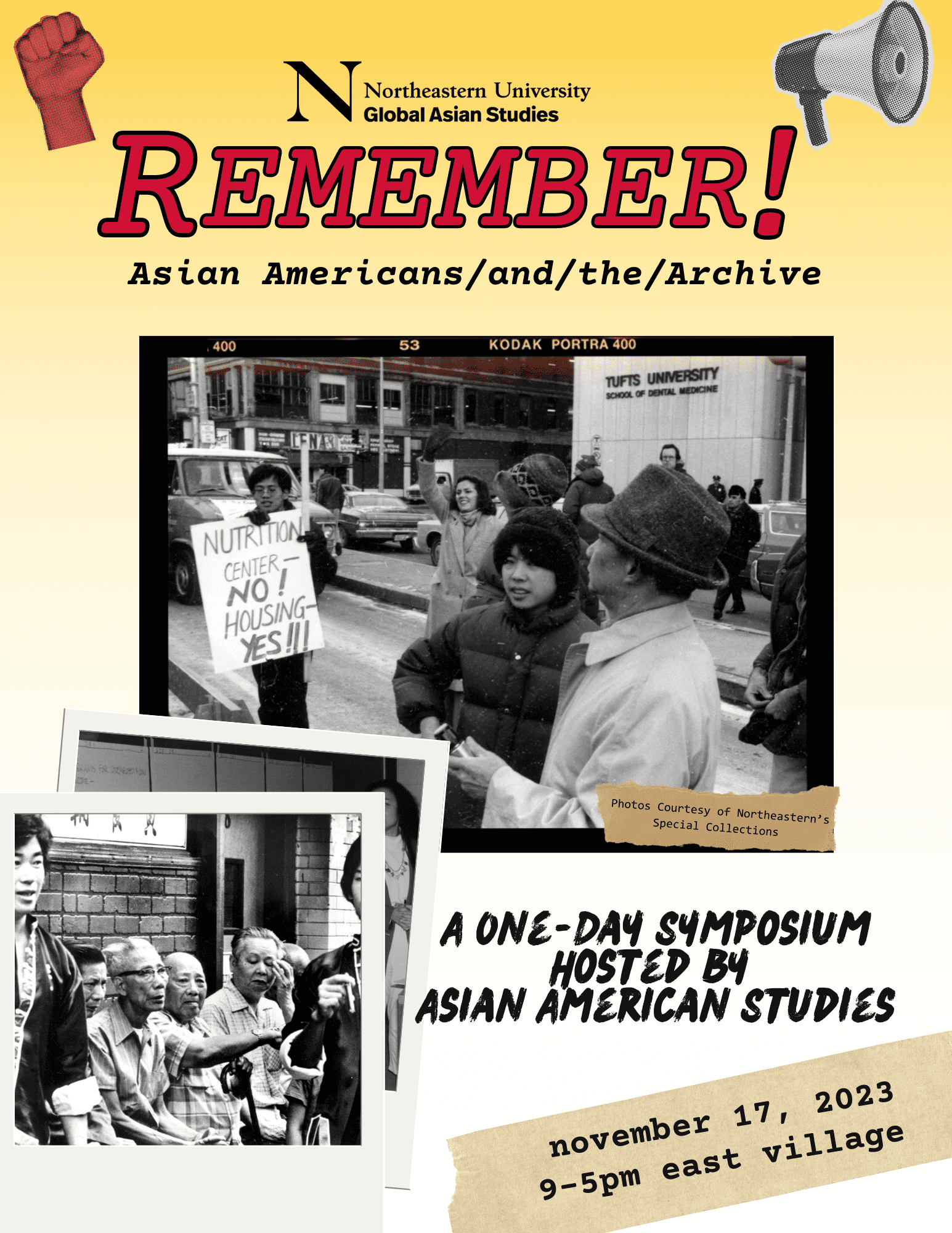
So I think I've talked myself into using this book in my course, if I get to teach it. It can also tie into a possible archival project I plan to have students do in the course. Coincidentally, Northeastern's Asian American Studies program is hosting a symposium called "Remember! Asian Americans and the Archive" on November 17, which I've signed up to attend.
[Update, 5/17/24: Here's a book talk by Shimabukuro from 2017.]
Tuesday, June 23, 2020
Another new book in the former native speaker's library
One thing that I've been thinking about recently, first with the COVID-19 pandemic and then with the demonstrations for racial equality that came in the wake of the murder of George Floyd, is the relations among minorities in the US--in particular Asian Americans and African Americans. My wife and I have talked about this a lot, and I've tried to do some reading, too, on the different ways Asian Americans are reacting to or are involved in this struggle for racial justice. Admittedly I'm a privileged outsider to both of these groups and their struggles, but that's why I'm trying to learn more. And as a colleague mentioned at a webinar on Juneteenth today, I shouldn't be trying to corner my friends and colleagues of color and expect them to teach me everything I need to do without me doing my homework first.
I bought Living for Change, the autobiography of Grace Lee Boggs. I had seen the PBS film about Boggs a few years ago and was impressed by this documentary of a Chinese American woman who was intimately involved with the struggles of African Americans for decades. I've read through the first four chapters so far. I'll probably post some thoughts on it (or quotes from it) once I'm done.
Subscribe to:
Posts (Atom)